
The Mileseey PF260 Tour Rangefinder is positioned as a relatively entry-level option in a market where prices can quickly climb into the £300–£500 range. The big question is simple: do you really need to spend that much to get reliable performance?
This review focuses purely on the rangefinder itself — how it performs, what features it includes, what it lacks, and whether it delivers where it matters most. From slope functionality to flag lock and real-world accuracy comparisons, here’s what the PF260 actually offers.
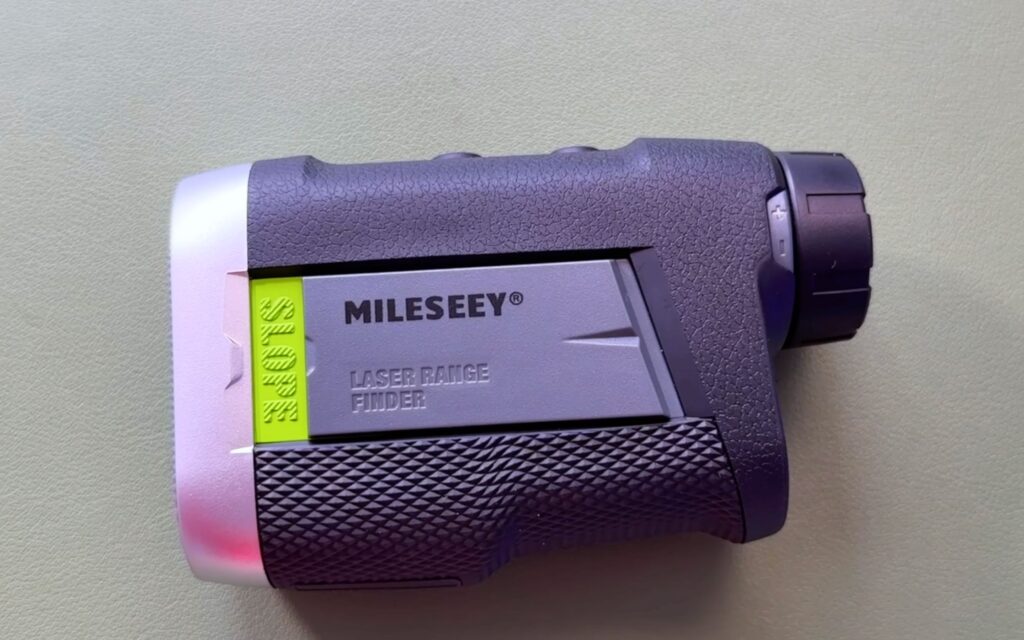
If you’re a budget-conscious golfer trying to decide whether to save or spend, this breakdown should help you make that call.
At a glance
- Model: Mileseey PF260 Tour Rangefinder
- Price paid: $150
- Slope mode: Yes (side switch to toggle)
- Flag lock: Yes (with vibration feedback)
- Cart magnet: Yes
- Battery: USB-C rechargeable plus CR2 battery backup
- Display: Standard display (no OLED or AMOLED)
What this is (and what it isn’t)
The Mileseey PF260 is a budget-friendly laser rangefinder that includes several core features most golfers expect today. It has slope mode, flag lock with vibration, and a built-in cart magnet. On paper, it ticks a lot of boxes.
What it isn’t is a premium, feature-heavy device with advanced connectivity and high-end optics. You’re not getting the ability for it to talk to an app or connect to a watch. You’re also not getting OLED or AMOLED display technology, and the optics aren’t described as being as clear as higher-end models.
This is a functional, straightforward rangefinder built around value rather than luxury.
What’s new / what stands out
For the price point, the PF260 includes some notable features.
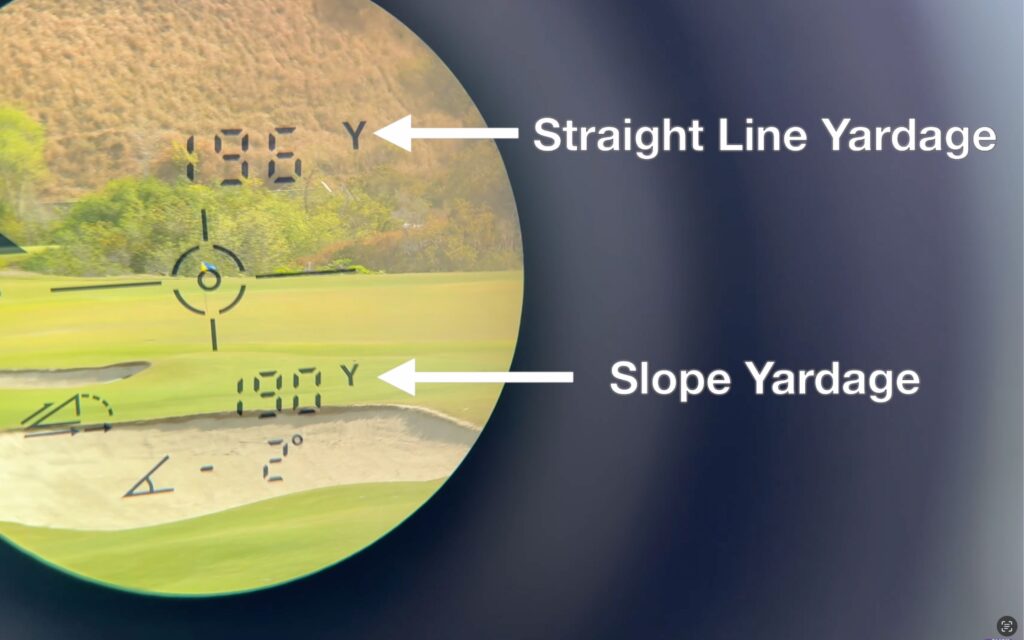
- Slope mode: Easily turned on or off using a large side switch. This allows you to factor in elevation changes when getting yardages.
- Flag lock with vibration: When the device locks onto the flag, it provides vibration feedback. The vibration isn’t the strongest, but it’s enough to confirm a successful lock.
- Cart magnet: Built into the side for convenient attachment to a buggy.
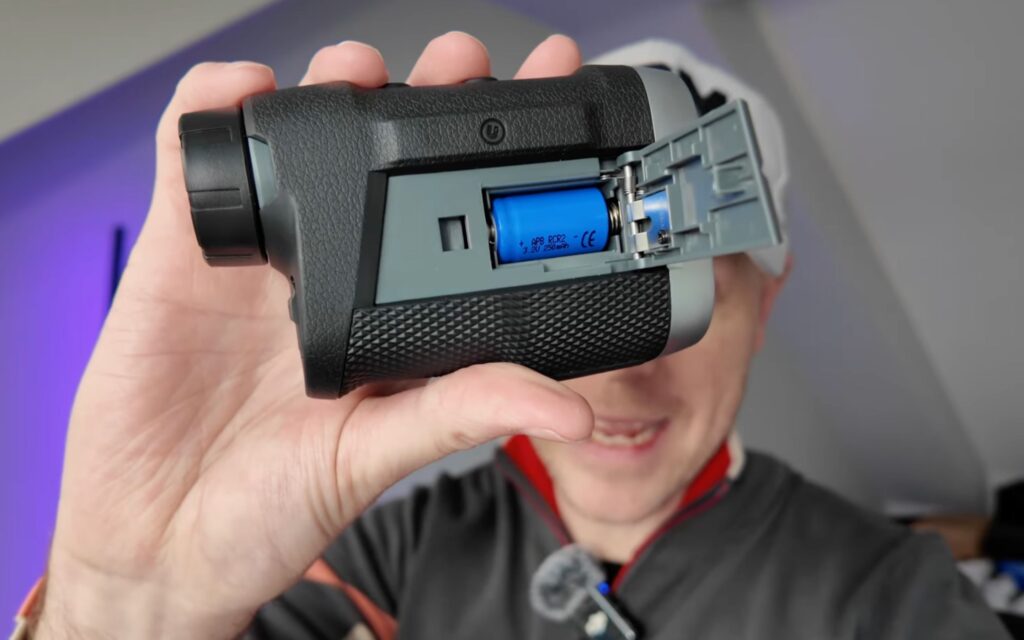
- Dual battery system: USB-C rechargeable capability plus a CR2 battery backup.
The dual battery setup is particularly interesting. After returning from the trip, it was noted that the rangefinder includes a CR2 battery in addition to the USB-C charging option. That means you can recharge it but also rely on a traditional battery as backup, which should ease concerns about battery life.
One small issue observed was that after sitting in the bag for a while, the device occasionally reset out of flag lock mode. It didn’t happen every time, but sometimes required pressing the menu button to return to flag lock. It’s unclear whether this is a timer reset or accidental button contact in the bag, but it’s worth noting.
Performance and real-world testing
In challenging early morning fog, the PF260 struggled to pick up the target consistently. In one example, it returned an incorrect seven-yard reading when visibility was heavily compromised. It was simply too foggy at that moment for the device to function properly.
However, it was also acknowledged that many rangefinders would likely struggle in that level of fog. Once conditions improved, the PF260 worked absolutely fine.
In normal playing conditions, it performed much like other budget-level rangefinders. Operation is simple: press once to power on, press again to measure. Yardages appeared quickly, and the display — while not described as the clearest available — was still easy to read.
An accuracy comparison was conducted against a Bushnell Pro XE. On one measurement, the Bushnell recorded 286 yards. The Mileseey initially locked onto reeds behind the intended target at 328 yards. After a second attempt, it locked correctly at 285 yards — just a one-yard difference.
The PF260 did take slightly longer to acquire the correct target compared to the Bushnell. That speed difference is one of the areas where more expensive models justify their price. However, once locked onto the correct target, the yardage gap was minimal — typically around a yard at standard approach distances of 150–170 yards.
For most golfers, a one-yard difference is unlikely to have a meaningful impact on club selection or scoring.
Comfort, fit, build quality
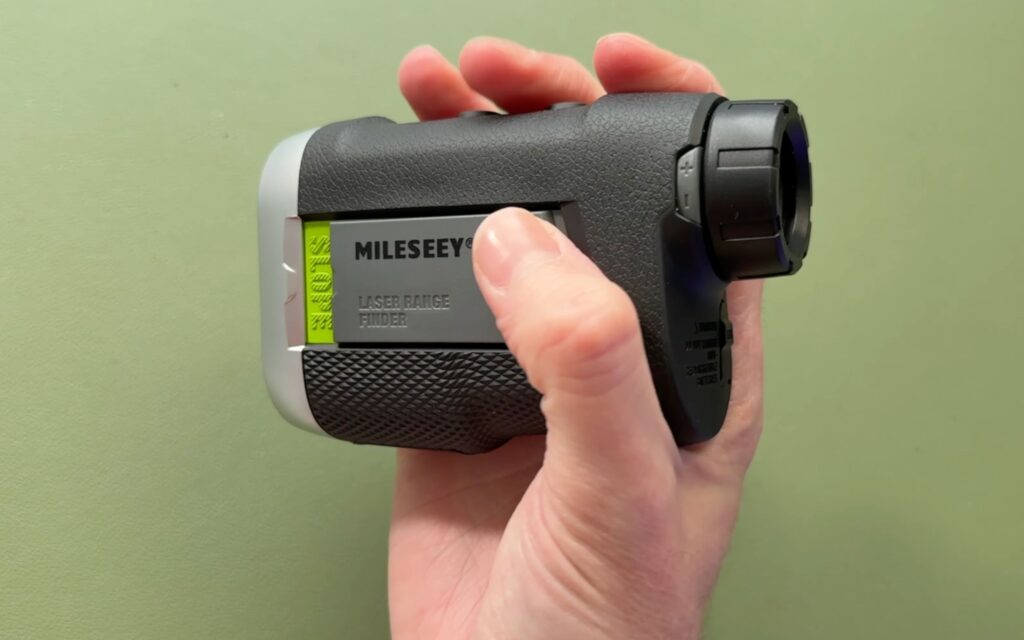
In hand, the PF260 fits comfortably and is easy to hold steady. Ergonomically, it works well.
That said, it does feel quite plasticky and lightweight, especially on the top. It doesn’t have the premium, solid feel of more expensive rangefinders.
But at this price point, that trade-off is expected. You’re not paying for luxury materials. You’re paying for core functionality.
Pros and cons
- Pros:
- Budget-friendly price
- Slope mode included
- Flag lock with vibration
- Cart magnet
- Dual battery system (USB-C + CR2)
- Comparable accuracy to premium models in normal conditions
- Simple, easy operation
- Cons:
- Struggles in heavy fog
- Slower target acquisition compared to premium models
- Occasional reset out of flag lock mode
- Plasticky, lightweight feel
- No app or watch connectivity
- No OLED or AMOLED display
Who should buy it (and who shouldn’t)
The Mileseey PF260 is aimed squarely at golfers who want reliable core features without spending premium money. If you primarily care about accurate yardages, slope functionality, and simple operation, it delivers on those essentials.
Golfers who play standard approach distances and don’t require lightning-fast target acquisition or ultra-vibrant displays will likely find this more than sufficient.
However, if you value the fastest possible flag lock, top-tier optics, enhanced display brightness, or smart connectivity features, you’ll need to look at more expensive models. Those upgrades come at a significantly higher price.
Bottom line
The Mileseey PF260 Tour Rangefinder proves that you don’t necessarily need to spend £300–£500 to get dependable performance.
It includes slope mode, flag lock, a cart magnet, and a flexible battery setup. In normal conditions, it delivers yardages that are extremely close to premium models, even if it takes slightly longer to lock onto the target.
It does struggle in heavy fog and lacks the premium feel and advanced features of more expensive options. But for $150, it offers strong value and covers the fundamentals well.
Ultimately, it comes down to your budget and expectations. If you want solid performance without paying for high-end extras, the PF260 is a sensible option.
Affiliate links & disclaimers
As an Amazon Associate I earn commision from qualifying purchases.
Amazon – £139.99 GBP / $169.99 USD – https://amzn.to/3OqhLui